
Unlocking Africa’s Educational Potential: The Biggest Global Opportunity of the Next 30 Years
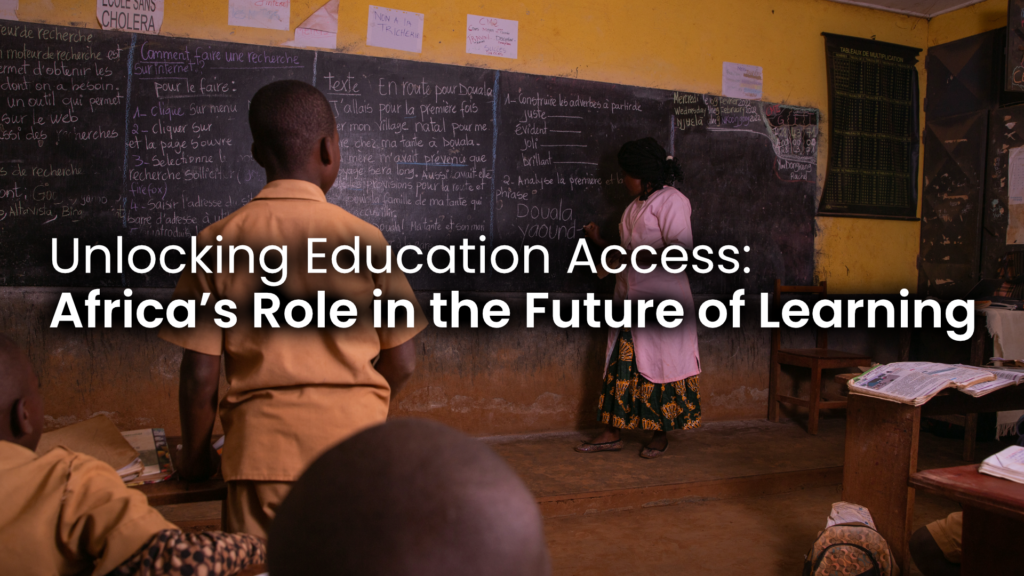
I recently returned from Africa, and it completely reframed how I view the future of education. What I found was not a continent waiting to be saved, but one full of energy, ambition and innovation. Coastal cities that rival the French Riviera, entrepreneurs in Nairobi building cutting-edge tech companies, and lecture halls in Ghana filled with students eager to compete on a global stage. Africa is not on the side-lines of global progress. It is ready to lead. A Demographic Shift That Changes Everything Across most of Europe and Asia, populations are ageing. In contrast, Africa’s median age is just 19. That fact alone carries huge implications. By 2050, one in four workers globally will be African. While many developed countries face a workforce shortage, Africa offers a growing, dynamic and young population ready to step in. But unlocking this opportunity requires more than optimism. It requires access to education that is affordable, scalable and genuinely high quality. The Real Barrier Is Cost, Not Talent In many African institutions, the desire to deliver excellent education exists, but the financial reality makes it almost impossible. Creating a single high-quality e-learning course through traditional development methods typically costs between £50,000 and £100,000. That is simply unfeasible for schools, colleges and training centres operating on a fraction of that budget. This is not a question of talent or capacity. It is purely a matter of access. These barriers are artificial and outdated, and now, thanks to technology, they can be removed. How AI Is Transforming Access to Learning Artificial intelligence is radically changing what is possible. Using AI-powered tools, institutions can now convert existing curriculum materials, such as textbooks or PDFs, into fully interactive e-learning courses in as little as 20 minutes. What once took months and tens of thousands of pounds can now be achieved for a fraction of the cost, without compromising on quality. This means that the same learning tools once reserved for elite universities can now be placed in the hands of schools and training centres across Africa. It creates a level playing field. Institutions are no longer limited by budget but empowered by technology. https://www.youtube.com/watch?v=dp72lUTkOT0 The Local and Global Impact Consider a secondary school in rural Ghana. Just a few years ago, it would have had little chance of delivering modern, digital learning content. Today, with AI tools, that same school can produce high-quality interactive courses tailored to local students and relevant to global standards. Or take a vocational training centre in South Africa. With these technologies, it can now create programmes that are as advanced and engaging as any offered in Europe or North America. When education is no longer constrained by geography or cost, talent becomes the true differentiator — and there is no shortage of talent in Africa. A Call to EdTech Providers This is not about charity. It is about smart business. Africa represents one of the largest and fastest-growing education markets in the world. For EdTech companies and training providers, this is an opportunity to engage early, build partnerships and create pricing models that reflect local realities. If you sell educational software, tools or services, consider offering regional pricing that makes your platform accessible to African institutions. The return is not just financial. It is reputational, strategic and deeply aligned with the future of education. Closing Thoughts For generations, wealth flowed out of Africa to build the infrastructure of Europe and North America. Today, we have a chance to reverse that — not through extraction, but through investment in people. The technology now exists. The talent is already there. The demand is growing. All that remains is action. When Africa succeeds, we all benefit. The next 30 years of global education will be shaped not by those who have the most, but by those who are most ready to lead. Africa is ready
Listening to Learn: Why Audio Is the Most Underrated Learning Format
What if your commute, your bath, or the 20 minutes before bed became the most productive learning time of your day? It is not just possible. It is proven. And your brain is already wired for it. We all know that feeling of guilt when a training PDF sits unread, or when our “to-learn” list keeps growing. But what if instead of carving out more time to sit and read, you could learn more simply by listening? In this post, we explore the neuroscience behind why podcast-style learning is so effective, and how AI now makes it easy to turn any document into an audio-first experience. Why We Learn Better by Listening Let us start with a simple truth. We love podcasts. Whether it is history, culture, business or comedy, podcasts are now the go-to format for staying informed. But what makes them so effective for learning? It is not just convenience. It is biology. Our brains process auditory content differently than written text. When we listen, we engage what neuroscientists call auditory processing advantages. We are not just receiving information. We are actively decoding it in real time, triggering memory, emotion, and association. Take a podcast like The Rest is History. The hosts do not just list facts. They build stories, debate perspectives, and create meaning. This type of content engages multiple brain areas at once, creating what researchers call elaborative encoding. The result? Information sticks. The Neuroscience of Podcast Learning Studies show that listening to well-crafted educational content can improve memory retention by up to 65 percent compared to reading the same material in a static format. Why? Because: Podcasts allow us to create emotional associations with ideas They activate multiple learning pathways at once We can engage with content in low-distraction environments like walking or commuting When you listen, you are not just passively consuming. You are forming deeper neural connections, using both auditory and visual imagination to build context and meaning: https://www.youtube.com/watch?v=cK2ktC3jXmQ&t=12s From PDFs to Podcasts: How AI Makes It Easy The biggest challenge with audio learning has always been content creation. You might love the idea of podcast-style training, but turning your manuals, HR policies or textbook chapters into a polished audio format takes time and skill. That is no longer the case. Today, AI-powered tools can convert any PDF or document into podcast-ready content in minutes. You upload your material – a research paper, a training guide, a policy document – and it is transformed into an engaging, human-sounding, conversational podcast optimised for listening. You are not just converting content. You are adapting it for how the brain naturally prefers to learn. Try It for Yourself Here is a challenge. Choose a PDF you have been meaning to read. Upload it to Open eLMS Learning Generator and create your own podcast-style learning content. Then plug in your headphones and listen. Notice how the conversational tone makes complex ideas easier to understand. Observe the mental images you create while listening. Pay attention to how much more you retain afterwards You will see first-hand what cognitive scientists already know. Listening drives deeper comprehension. Learning 3.0: More Than Just Audio This is not just about making content portable. It is about creating a format that fits into your daily routine without needing to block out extra time. Your commute becomes a lecture, your workout becomes a workshop, your lunch break becomes a classroom Because podcast-style learning uses natural tone and structure, it helps remove the barriers that make traditional training feel dry or overwhelming. It is not just easier. It is more effective. Stop Reading, Start Listening The future of learning is not about more content. It is about more accessible content. Podcasts are already transforming how we consume information. It is time they transformed how we deliver training too. If you are only learning through reading or video, you are missing out on a powerful cognitive advantage. Visit www.openelms.ai to try for yourself. You will be surprised how much more you learn when the format fits your life.